What MCP is, and why it matters for finance
Every vendor is currently building “AI into the product”. Convenient, but it produces ten separate chatbots that don’t know each other and each see their own slice of your data. MCP turns that around: one open standard through which your AI assistant can safely reach your systems.
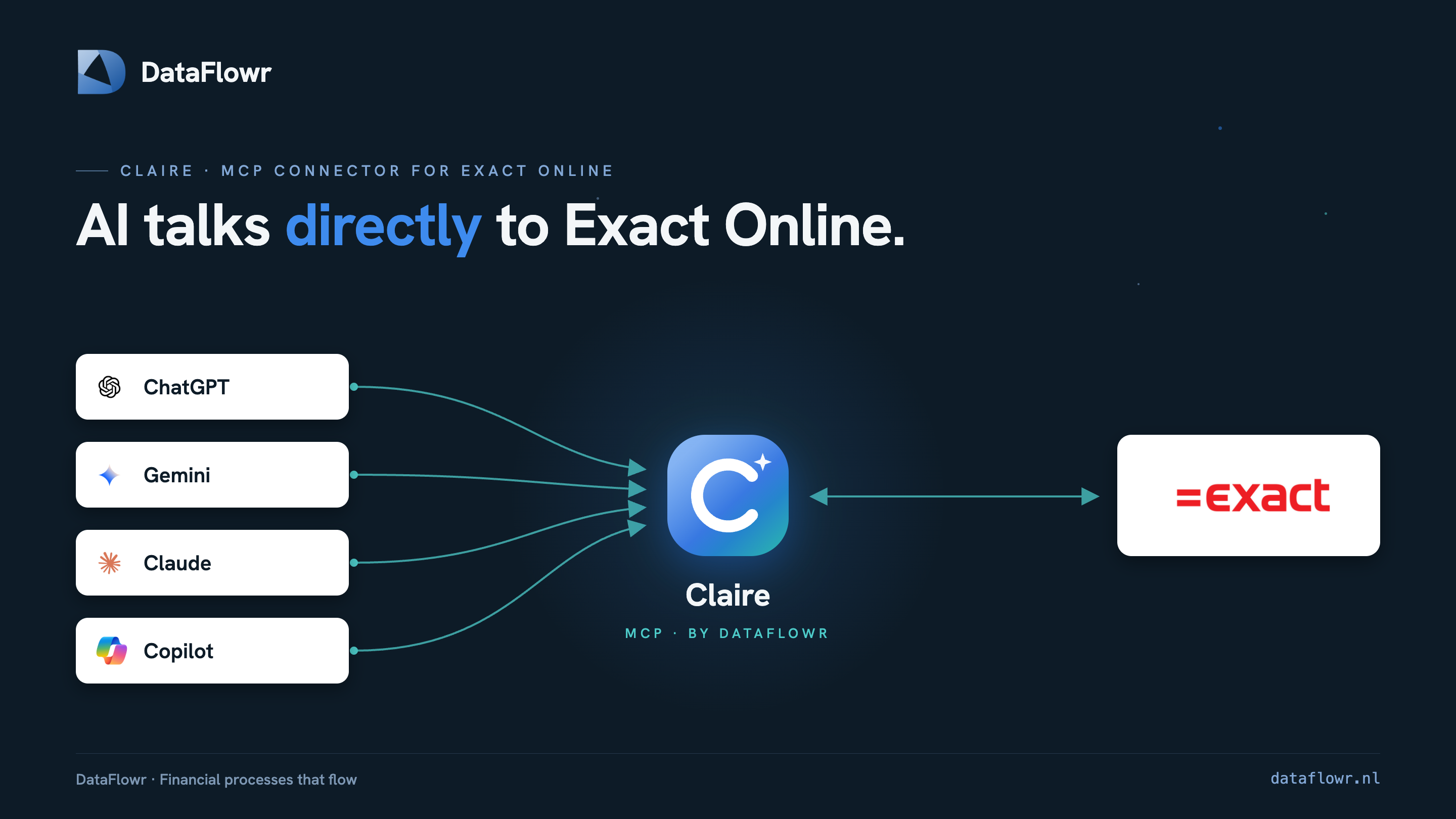
MCP stands for Model Context Protocol, an open standard introduced by Anthropic in late 2024 and now broadly adopted. It describes how an AI assistant may use a system’s tools: which actions exist, which data they involve and how access is arranged. What USB-C is for devices, MCP is for AI assistants: one plug instead of a custom cable for every combination.
How it works
A system, say your accounting package, offers an MCP server: a list of well-defined tools such as “fetch the trial balance” or “show this customer’s outstanding items”. Per question the assistant picks the tool it needs, calls it and phrases the answer based on what comes back. You sign in with your existing account, so the assistant sees exactly what you are allowed to see, nothing more.
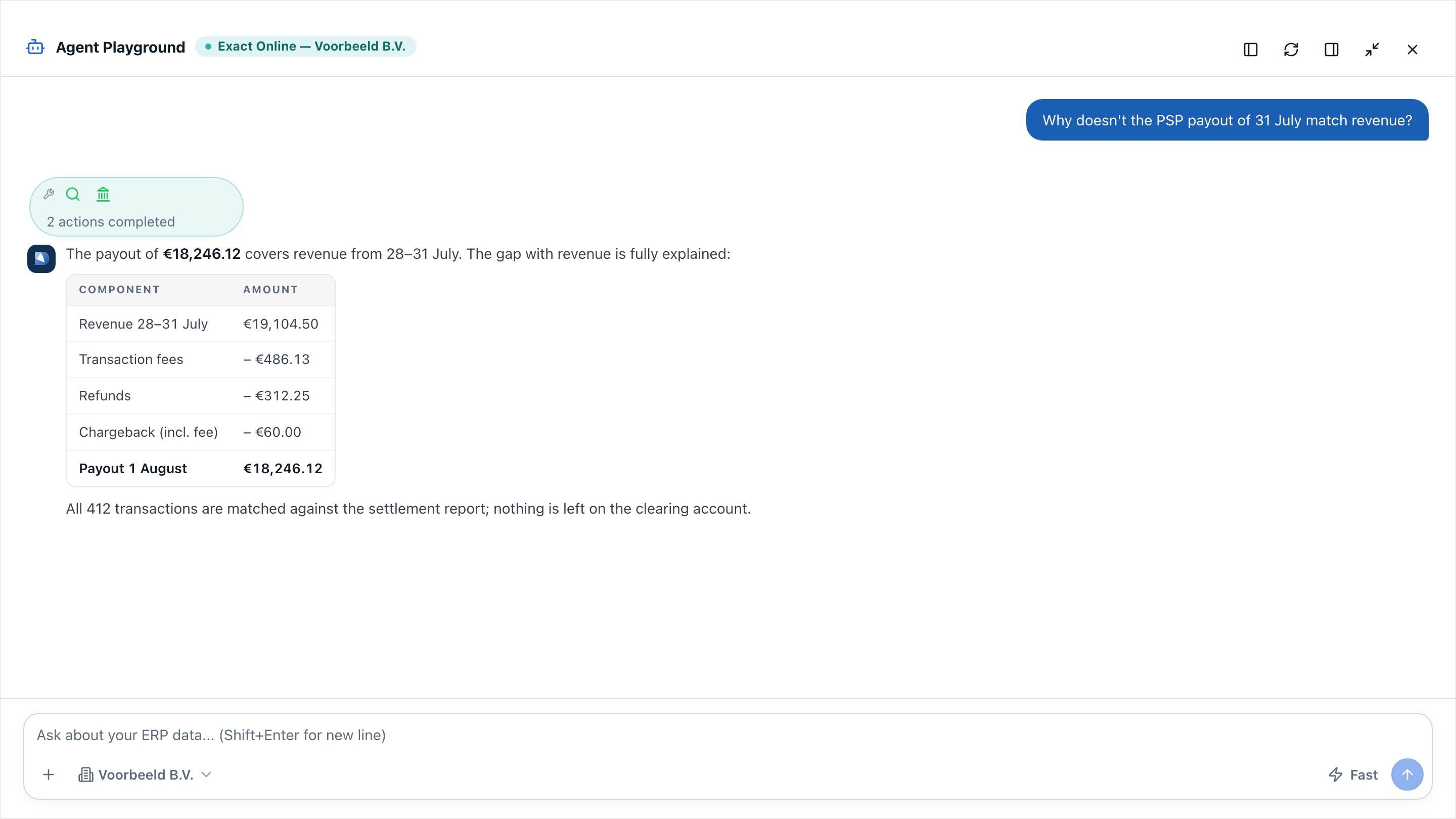
Crucially, the model does not get a copy of your database. Every question triggers a targeted query in the administration itself, at the moment you ask it. There is no data dump living its own life somewhere else.
"The AI assistant does not get an export of your administration, it gets a doorbell. Every question passes through your authorisation, and the figures stay where they are."
Why this matters for finance
For a marketing text it hardly matters where an answer comes from. For a balance sheet position it does. Three properties of MCP make the difference between a chatbot and a verifiable answer:
- Answers come from the administration, not from the model. The language model phrases; the figures are fetched per question through a tool. That makes it traceable which query underlies an answer, and that is exactly what a controller wants to be able to verify.
- Authorisation stays where it belongs. Access runs through your existing login and permissions. No separate copy, no shared export folder, no service account with overly broad rights.
- You are not tied to one assistant. Because MCP is an open standard, the same connection works in Claude, in other MCP clients and in your own agents. The investment is in the connection to your administration, not in one vendor’s chatbot.
What this looks like in practice
We developed an MCP server for Exact Online, with reporting tools for the trial balance, the profit and loss statement and ageing analyses, among others. The number-crunching happens in a deterministic calculation layer; the language model only phrases the answer. The same administration gives the same outcome, no matter who asks.
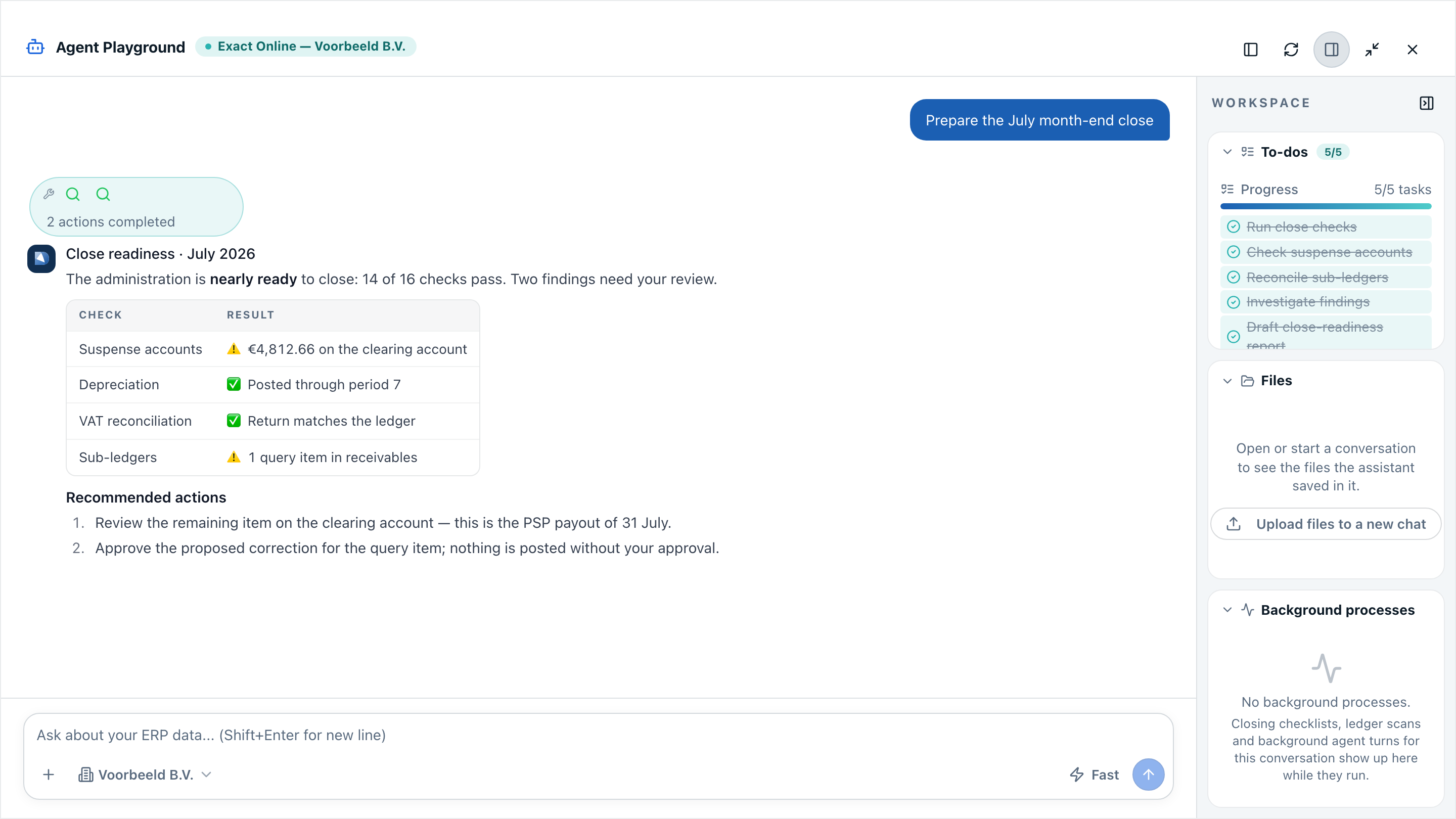
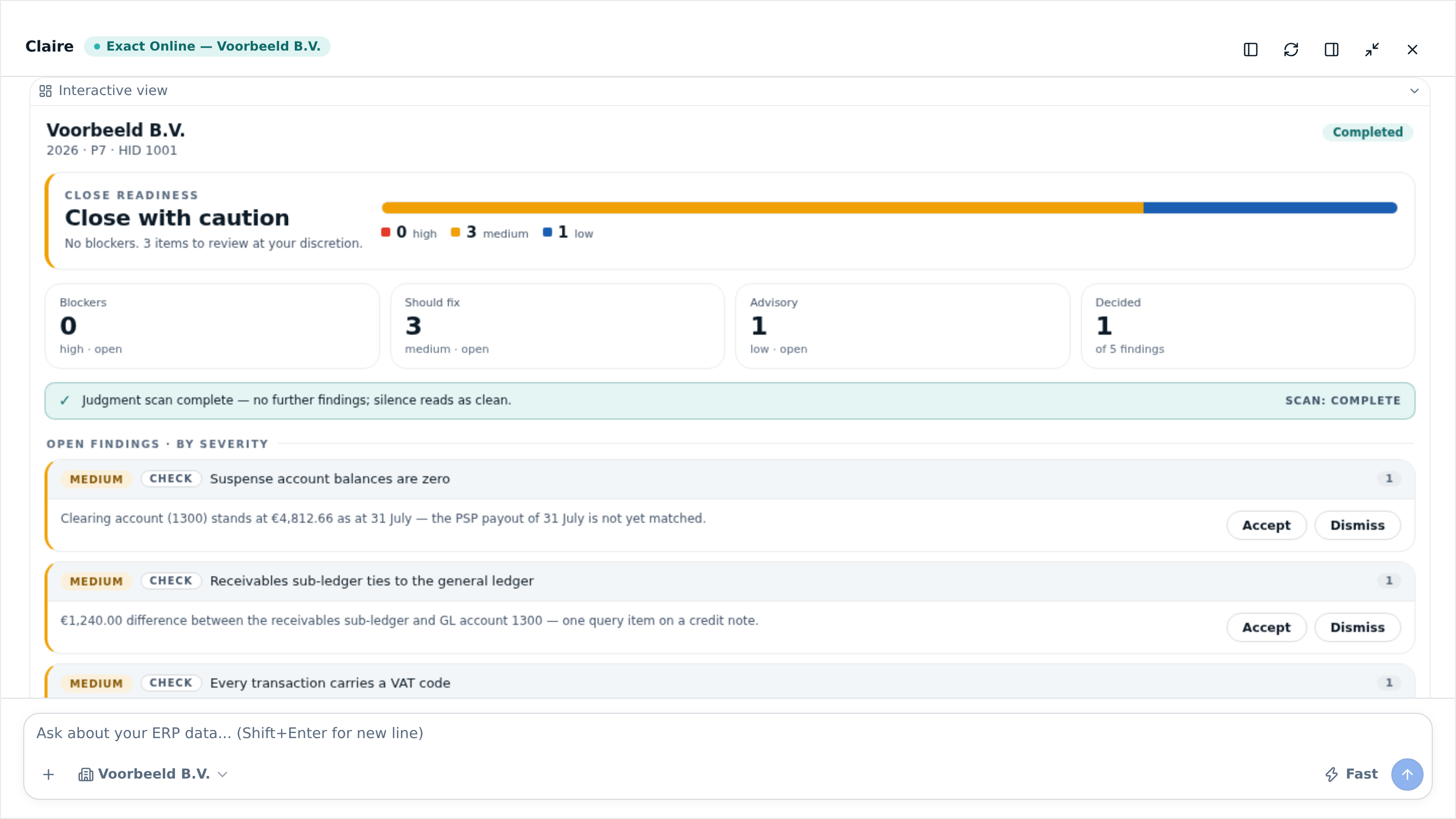
Claire uses that server: questions in plain language, fixed close checks, and postings only after your explicit approval. MCP is not a marketing term here but the foundation: it is the reason Claire can work inside your own administration rather than in a copy of it.
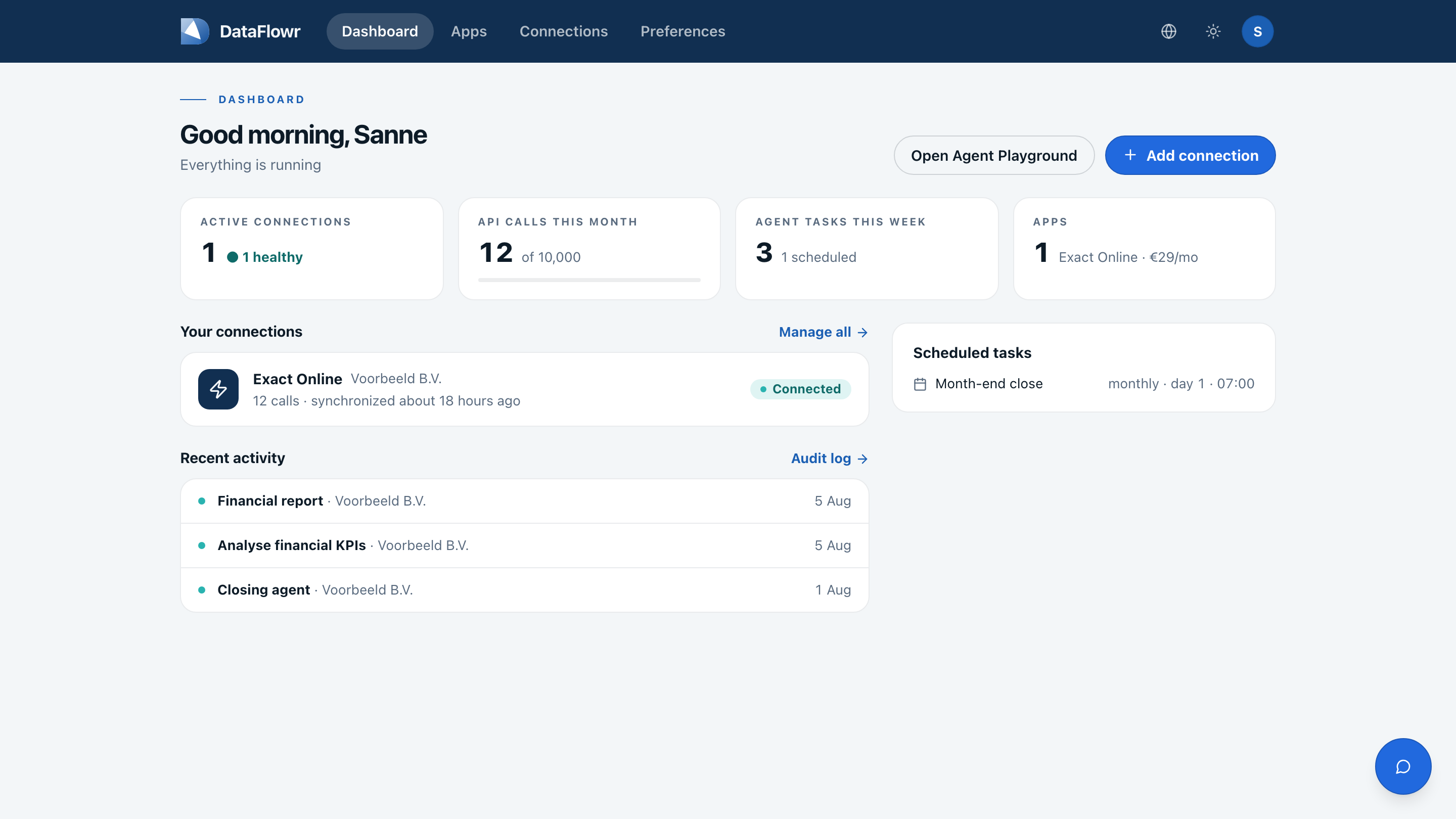
Claire itself runs in an environment we developed at DataFlowr, on our partners’ infrastructure and with language models from our supplier. What makes that controllable is how it is set up: no shadow copy of your administration is stored, every question is answered by querying Exact Online directly at that moment, changes always require manual confirmation, and everything is logged.