Why the month-end close still takes a week, and what actually shortens it
The same checklist every month: do the opening balances add up, are the suspense accounts empty, do the sub-ledgers reconcile? Important work, but largely routine, and exactly where things slip through.
What you don't see, or don't get to, shifts to the next month. Not because your team works carelessly, but because the close consists of dozens of small checks that all walk through the same administration by hand. When it gets busy, the first check drops. During holidays, the second.
The problem isn't the amount of work
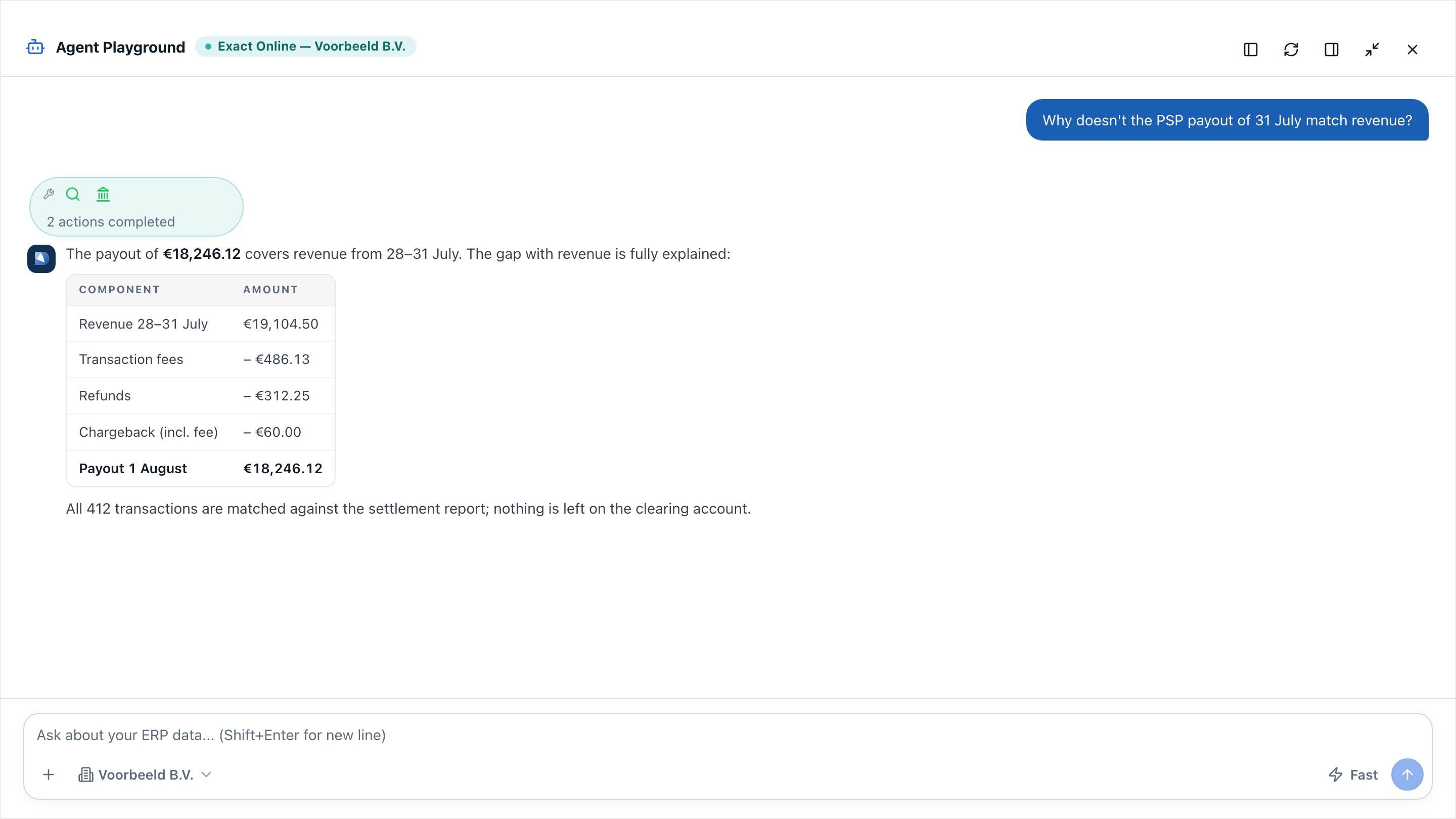
Hiring more people rarely fixes this: the work isn't too much, the work is too manual. Every question starts again with exports, pivot tables and re-typing, and with the next question the same process starts from scratch. The figures already exist. They're just hard to reach.
"The close shifts from searching to reviewing. Your team no longer walks through every suspense account, they review a prepared list of findings."
Three things that measurably help
Not every improvement requires an implementation project. In practice we see three interventions that make the difference, in this order:
- Make the checks deterministic. The same administration must give the same outcome. As soon as a check depends on who performs it, it is not a check but an estimate.
- Separate flagging from judging. Let a system surface notable items, query items, possible duplicates, unusual contra accounts, and keep the judgement with your controller.
- Record the decision, not just the correction. What was investigated, what came out and what did you decide? Those three together lighten the work in the months ahead.
What this looks like in practice
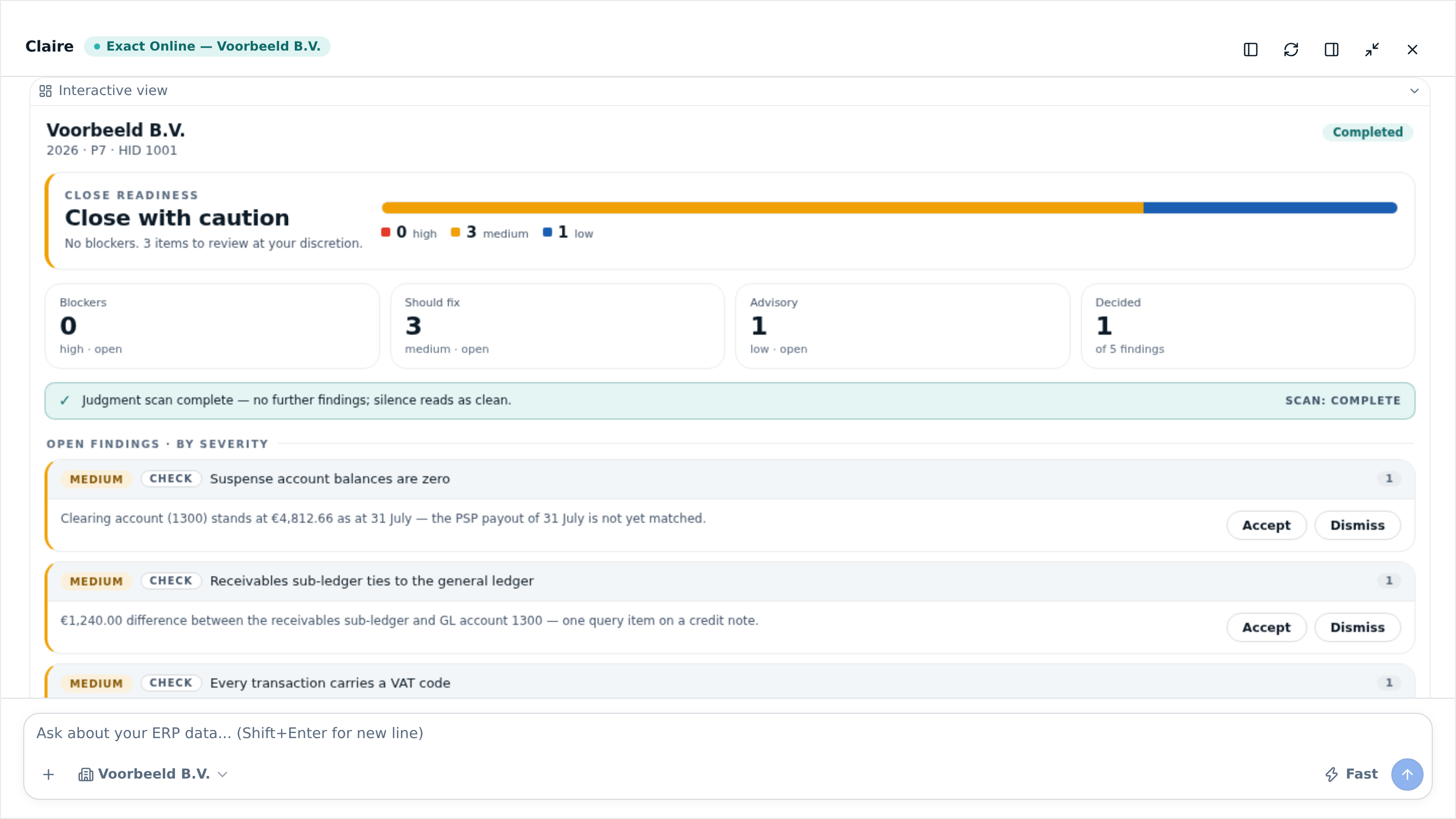
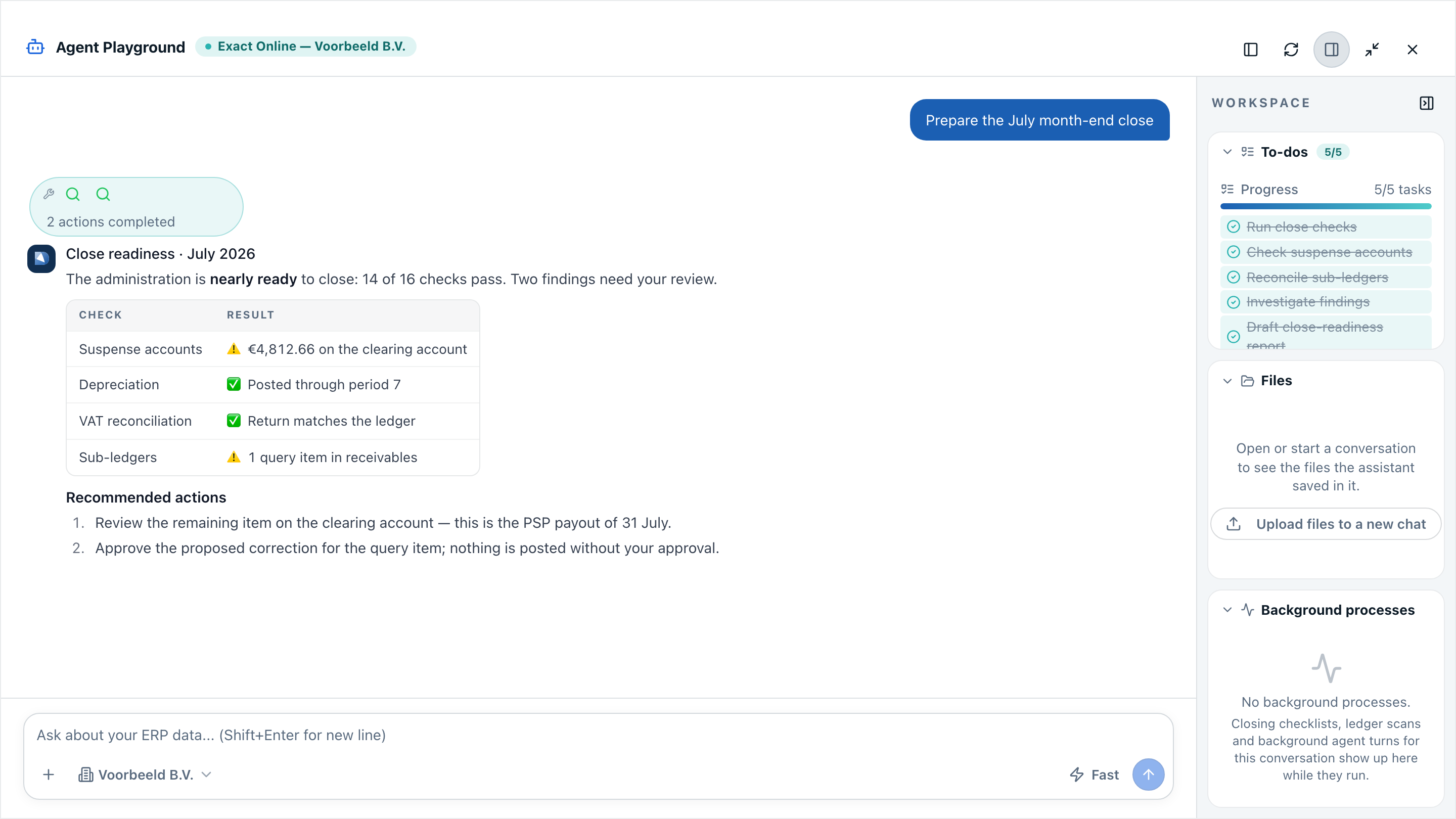
On the first working day an agent walks through a fixed set of close checks, investigates the deviations that come out and delivers a close-readiness report: a clear overview of what still blocks the close, with findings and concrete recommendations. Your controller starts not with searching but with reviewing, and nothing is posted without approval.
The number-crunching does not happen in the language model, but in a calculation layer that is deterministic and traceable. The language model only phrases the answer; the figures come from your own administration.